Quilt No.784CN - Charlotte Nattey

Charlotte Nattey
Owner: 
Charlotte Nattey
Location: 
ACT
Maker
Maker: 
Edith Millington
Made in
IRELAND Cookstown
Date: 
1901 - 1920
Description: 
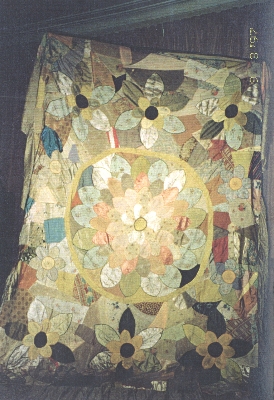
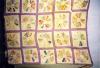
The quilt top combines various scarps of silk in an informal pattern of flowers made from individual silk petals with a large flower in the centre. There is crazy patchwork in between the flowers. The pieces are sewn on with feather stitch, blanket stitch and satin stitch. There is a 37cm ruffle on the two long sides. There is no padding and the backing is silk.
2140 x 1550mm
History: 

The quilt was made by Edith Mary Millington at Lissan Rectory at Cookstown, Northern Ireland c.1920. It is thought to include parts of her wedding dress dyed and sewn in. It was made for her neice Mildred Millington born 1910. It is now owned by the maker's grand-daughter Charlotte Nattey.

Story: 

"This quilt is totally different from the one done by my grandmother and reflects both changing times and the obviously different character of mother and daughter. This quilt is obviously made by eye and not strict measurements - the stitches are randomly different as the mood took her. It is still very fresh in colour and must have been quite vibrant. I'm sure that it is again scraps of clothing that she utilised.
I knew her as a child as a warm hearted interested woman with wonderful white hair.
She married a country Rector in Northern Ireland and threw herself into community life. She was renowned for always doing things in a rush and maybe forgetting something in the process - this quilt reflects her personality very well.
Life must have been pretty idyllic; no huge income was needed to have 3 or more 'staff' and those to run the farm that came with the Rectory. Food and produce was grown and stored and was used for church fetes etc. There was time for tennis and tea parties and the stories from both my aunt and father reflect an easy life style with time both to laugh and reflect. There was of course a lot of obligation and duty - no time off for holidays and Sunday school, Mothers' Institute, the Girls Friendly Society etc. all to be run."
[Charlotte Nattey 6.4.97]
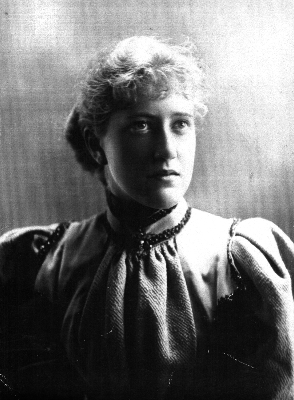
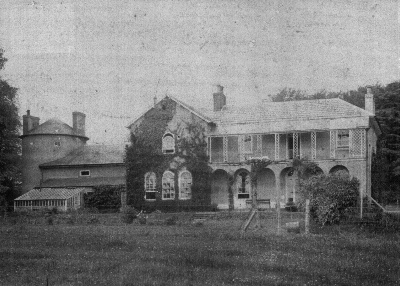
Edith Mary Millington
Lissan Rectory, Northern Ireland

Related Quilts:

Lyn Cottingham
Single bed quilt hand pieced from silk hexagons using the English method. The border, backing and central rosette of hexagons are black. All other hexagons are a mixture of plain colours, stripes and florals. They are randomly placed. It is quilted in a diamond pattern. The padding is a thin cotton woven material.
1550 x 1330mm
Harden Murrumburrah Historical Society
Patchwork quilt has pieced blocks in the 'Ohio star' pattern in red print and white cotton, alternating with plain white blocks. Quilt has a 9cm frill in red and grey geometric print cotton, machine stitched around the edge. Quilt appears to have some hand quilting. No padding. Backing is white cotton.
2210 x 2060mm
Yass & District Historical Society
Patchwork quilt made from diamond patches in the 'Cotton Box' pattern, in a wide variety of cotton fabrics, including plains, checks, stripes and florals. The patches have blotting paper templates. The quilt is edged with diamond shapes in a red floral cotton. The backing is of the same red floral pattern, featuring yellow, turquoise and white flowers and leaves. Hand sewn.
2135 x 2033mm
Ankie King
Small square piece of crazy patchwork in silks and taffetas. Many of the seams are oversewn with decorative embroidery stitches. There is a calico backing.
550 x 550mm
Glenda Wilkinson
Small quilt made from pieces of heavy weight wooollen coat material cut into strips and machined together. It is reversible. Each side is made from different materials but in similar colours of aqua, blue, green and beige. The 2 layers are quilted together with a few machined lines of straight stitching. It has a folded and machine stitched edge. There is no padding.
950 x 790mm
Dubbo Museum & Historical Society Inc
"English patchwork pieces. 1110mm x 1500mm. Hand pieced by at least two people. Made from scraps, cut down clothing and sheeting. Backing made from shirtings, dress fabrics, furnishing fabric and ticking. No synthetics. Machine quilted. Condition, fragile�.." [Dubbo Museum]