
Quilt No.517FW - Fran Williams
Owner:
Fran Williams
Location:
TAS
Maker
Maker:
Unknown
Made in
AUSTRALIA TAS
Patterms
Date:
1921 - 1940
Description:
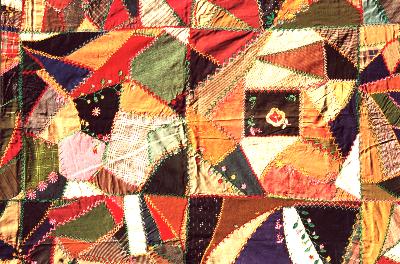
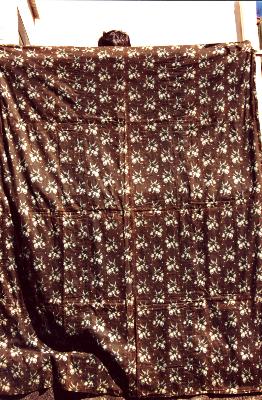
Crazy quilt made from a lot of light wools including gabardine types. Patches are outlined in embroidery stitches and there is additional embroidery on some patches. It is worked in 3 ply wool thought to be Patonyle (early blend of nylon and wool). The backing is a floral print mainly black with a cream flowers, brought to the front as a binding. Occasional stitches holding front to back by way of quilting. There is no padding.
1600 x 2100mm
1600 x 2100mm
History:
Believed to have come from the south of Hobart and be of Tasmanian origin. It was sold by the Lantern Gallery at Kingston to a private buyer who then sold it to the present owner, Fran Williams, in 1996. It is not used.
Story:
Unknown
Related Quilts:
Patchwork quilt, all cotton including cotton padding filler. The design is 'Dresden Plate' or 'Friendship Circle'. Background is white with multicoloured and patterned triangular pieces forming circles. Hand stitched and heavily quilted.
2235 x 1778mm
2235 x 1778mm
Cotton scrap quilt with shapes of squares and diamonds and strips. There is no padding and the backing is calico.
2125 x 1440mm
2125 x 1440mm
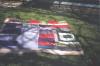
Double sided quilt machine made from clothing scraps. Shapes are mainly rectangles in corduroy and wool blend. The padding is an old grey blanket.
1524 x 1372mm
1524 x 1372mm
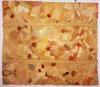
" This is an unfinished section/piece of crazy quilting. Ribbons divide the piece horizontally into three sections; between these are bands of pastel fabrics and embroidery in the crazy quilt tradition. The fabrics and threads employed are very luxurious: laces, satin ribbons and silk velvets. The embroidery is very fine, employing a wide variety of stitches and threads. This patchwork piece is padded with cotton wadding and backed with tarlatan." [NGA] 1170 x 1020mm
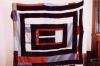
Double sided quilt. One side is frame with borders of wool rectangles mainly offcuts of men's suiting from tailors' shops. The other side is mainly flannelette in stripes and patterns similar to pyjama material. The padding is pieced patches of worn jumpers that were too matted to be unpicked. Machine construction.
1700 x 1490mm
1700 x 1490mm
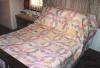
Cotton patchwork quilt in double wedding ring pattern in pastel prints. Quilted in a design of geometric flowers. Padding is probably cotton wadding, backing is cream calico. 2270 x 1970 mm.