Quilt No.581LC - Lorna Calder

Lorna Calder
Owner: 
Lorna Calder
Location: 
NSW Central West
Maker
Maker: 
Jane Calder
Made in
AUSTRALIA VIC
Date: 
1881 - 1900
Description: 
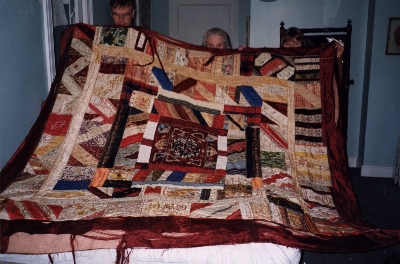
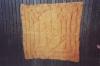
Patchwork quilt of multi coloured silks and brocades. Crazy patchwork borders, mainly rectangular fabrics pieced together in diagonal patterns, radiating from a central frame embroidered with flowers. Many pieces are extensively embroidered in a great variety of stitches and motifs; butterflies, sunflowers, cats, daffodils, crown, pawn broker's symbol, 'money to lend', 'good night', the initials of family members and 'mater 1890'. The quilt has a deep border of maroon sateen. There is no padding visible but it is possibly a blanket. The backing is green/gold silk with a self stripe with...
History: 

The quilt was made by Jane Calder (born Bennett) in Melbourne probably just before the turn of the century. Jane was known as 'Mater' in the family. It descended through the maker's family and came to Lorna Calder on the death of her mother-in-law in 1948. The quilt was found in an old tin trunk in the cellar of her Melbourne home in Grey Street, St. Kilda. In 1980 Mrs. Calder had the quilt repaired for her daughter Morella's return to Australia and it was used in her Balmain home. Additional initials relating to Mrs. Calder's family had been added by the Austrian needlewoman, Soula, who did the repairs. The quilt came back into Lorna Calder's hands on the death of her daughter. It is not used.

Story: 

The Calder family were from Edinburgh. Jane Bennett married William Henderson Calder in about 1860 and they went to New Zealand. She had nine children in New Zealand and they returned to Scotland in 1875. After a year or two the family came to Australia and settled in St. Kilda in a large house that still stands in Grey Street. Unfortunately much of the information about the quilt died with Lorna Calder's mother-in-law.
[Based on informal interview with Lorna Calder by Kylie Winkworth 15.9.99]
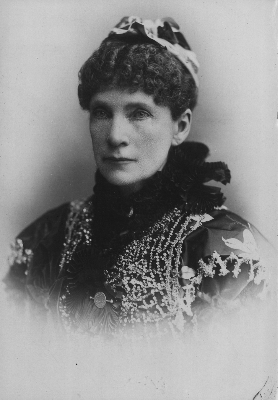
Jane Calder
Jane Calder
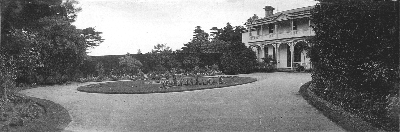
The house is St. Kilda where the quilt was made

Related Quilts:

June Brown
Pieces of heavy woollen material have been strip pieced and then joined. The joined pieces have then been folded over and restitched along the sides to make a double sided quilt. It is very heavy.
1830 x 1400mm
Elizabeth Williams
Cotton quilt of plain and patterned hexagons, 6 joined to make a flower. The flowers are arranged in rows with single motifs filling the spaces. Hand sewn. The backing is heavy red cotton material. There is no padding.
2490 x 1803mm
Christine Barnes
Cotton quilt with rosettes of hexagons. There is a centre hexagon with a surround of 6 hexagons in a contrasting pattern and then an outer row of 12 hexagons in a different pattern. Between each rosette is a single row of hexagons in a print common to the whole quilt. The materials are typical of the 60s period. There is a deep aqua border. It is machine quilted. The backing is cotton.
2515 x 1829mm
Elsie Shephard
Double sided patchwork quilt/rug. Mainly squares machined together in strips (8 across). Average square 22 to 24cms. One side has a large piece of dark grey woollen material. The materials for the squares include tweed, mohair,many woollens, tartans and cream blanketing all of which were scraps or from used clothing.
1820 x 1680mm
Western Australian Quilters' Association
Quilt made from furnishing materials, mostly velour type or uncut moquette. The colours are dusty pinks and beige/camel/blue. It has been put together by making wide strips of various sized rectangles sewn together and any missing piece in a rectangle added by using another piece of material to complete the shape. There is no padding and the backing is winter cotton.
2000 x 1650mm
The Pioneer Women's Hut
Utility patchwork quilt made up of mainly squares of furnishing material machine pieced. It is backed with machine pieced patches of woollen jumpers, mainly machine not hand knitted. The back is possibly the top. There is no padding.
1950 x 1270mm