Quilt No.95YH - Yvonne Hore

Yvonne Hore
Owner: 
Yvonne Hore
Location: 
QLD
Maker
Maker: 
Leticia Turner
Made in
AUSTRALIA QLD
Date: 
1921 - 1940
Description: 
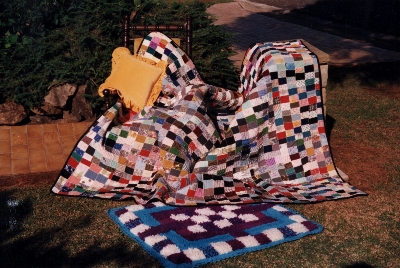
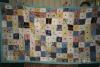
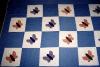
Reversible quilt. Both sides are small squares of cotton scraps mainly left over from children's clothes. Plain and patterned pieces in a wide variety of colours. Hand stitched. Padding is pieced men's clothing, jumpers, cardigans, trousers. The present owner zig zagged over the seams, bound the edges and 'clouted' (her term) it in circles and squares.
2080 x 1570mm
History: 

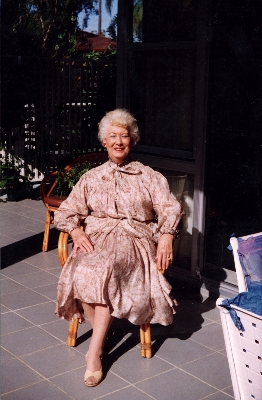
Leticia Turner, maternal grandmother of the present owner, commenced the quilt. Her daughter, Stella Cant, made the padding from pieces of men's clothing. Letita's grand-daughter,Yvonne Hore, assembled the quilt. It is still used occasionally in the caravan and was used as a floor rug when the children were small.

Story: 

"Circles and Squares"
The quilt was commenced by my grandmother who stitched everything by hand because she never owned a sewing machine.
My grandmother was very poor. Her husband died when my Mother (eldest daughter) was about five years old. My Mother had twin sisters three years younger. There were no pensions in those days and my grandmother (the youngest of eight girls) survived by washing and ironing and rearing state wards.
In later years one of her twin daughters, Rita, purchased an old Century treadle sewing machine and became the local dressmaker. All the left over pieces were used in the quilts.
My Mother was never a sewer, however, she made the backing out of old men's clothes, jumpers, cardigans, trousers etc.
The second world war came and things changed dramatically in our town. An American naval base hospital was set up and many of the local women went to work there.
My grandmother always lived with her younger daughter Rita until she died. My mother lived with me until she died so the quilt came into my hands. Because much of it was hand sewn I zig zagged over the seams and clouted it together (you couldn't call it quilting) in circles and squares. I also squared it up and bound the edges.
�...As you can see no templates were used the squares are quite irregular. It is showing signs of wear.
It is made from bits and pieces of fabric both cotton and woollen - what ever was available at the time."
[Yvonne Hore 1996]
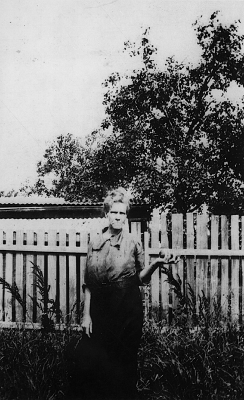
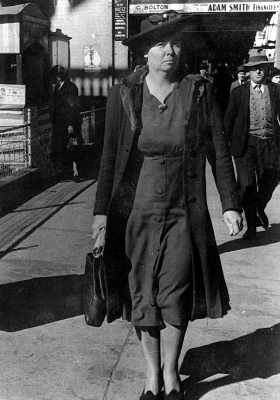
Leticia Turner
Leticia Turner
Stella Cant
Stella Cant
Yvonne Hore
Yvonne Hore

Related Quilts:

Annette Rich
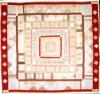
Unlined quilt. Central square of floral chintz with rectangular and chevron border making a larger frame that is set within another square-on-point frame edged with 2 toned red leaf pattererned chintz. This quilt is mainly pieced (squares, triangles, lozenges) but the hexagon rosettes are appliqued. Dress and furnishing cottons dating from the early 1800s. Raw edged, unfinished. All hand stitched.
2400 x 2400mm
Albury Regional Museum
Patchwork quilt or cloth made from pieces of woollen material used for regimental uniforms in England last century. Star pattern in colours, red, pale blue, green, maroon, yellow [white] and brown. Hand pieced probably by more than one person. Red fringe machined on. Red flannelette backing in poor condition. Two layers, not quilted.
1780 x 1700mm
Kristine Gray
Double sided quilt. One side is frame with borders of wool rectangles mainly offcuts of men's suiting from tailors' shops. The other side is mainly flannelette in stripes and patterns similar to pyjama material. The padding is pieced patches of worn jumpers that were too matted to be unpicked. Machine construction.
1700 x 1490mm
Alison Tunney
Quilt in mauve, pale blue and white squares, with wide borders of floral and off white. The quilting is a centre medallion with leaves on the border, and cross hatched over all. The padding is cotton batting, and the backing is plain white cotton. 2180 x 1900 mm.
Eileen Dinning
Double sided silk quilt. One side is paisley designs and the reverse plain silk . Machine pieced. There is a thin padding possibly sheeting.
2694 x 2287mm
National Gallery of Australia
"This is not a true quilt, but a pieced coverlet with a lining. The entire front face of the quilt is of pieced hexagonal and part hexagonal printed cotton patches. Pieces are joined with hand sewn over casting stitches of many different coloured cotton threads. The joining of the patches forms a 'daisy' pattern in some areas and in others it is random. The edge of the front face of the quilt carries a 40mm strip of cotton Chinoiserie which is then folded to the reverse of the quilt and becomes part of the lining. The template for the hexagon patches remains in many of the patches: writing paper and news print." [NGA]
The work is not padded "The lining at the edge of the quilt (for approx.175mm) is a plain weave fabric of a Chinoiserie design. The centre field of the lining is a rectangular panel of a twill weave brushed cotton fabric with a striped floral design." [NGA] 2215 x 2070mm