Quilt No.806QVM - Queen Victoria Museum and Art Gallery
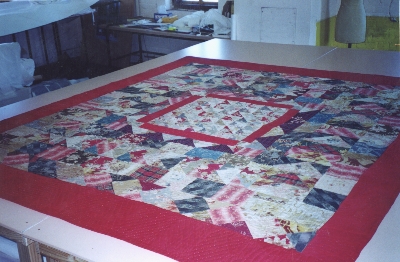
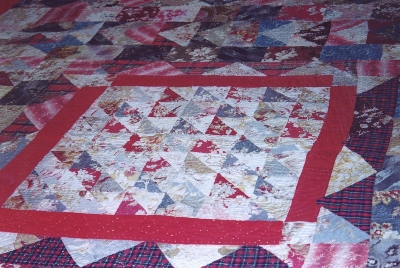
2330 x 2030mm
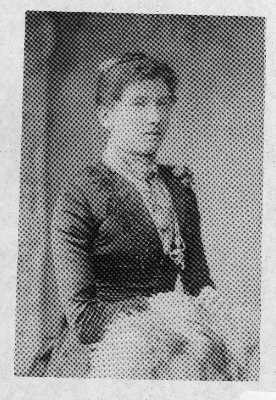
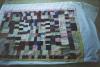
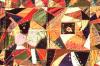
The quilt was made by Sarah Nicholls (born Mosely) c.1900 in Wales. Her grand-daughter Ida Rix came to Australia after World War 2. She donated the quilt to the Queen Victoria Museum and Art Gallery in 2001.
"This quilt was made about AD 1900 by Sarah Nicholls (nee Moseley) 1867-1906. She was one of a family of 8 children only 4 of whom survived to adulthood. Sarah herself died at the age of 39 from consumption. She was a pianist and singer and played the organ in church. In 1892 she married Evan Nicholls who owned the village store opposite to her home.
The village of Llandewi Ystradenau, their home lies in the valley of the River Ithon, tributary of the River Severn, bwteen the hills of the Gaer and Giant's Grave near Llandrndod Wells in Powys, Wales���..
Up until the 2nd World War the village consisted of 11 houses, a working flour-mill, water driven, a forge for shooing horses, a carpenter's shop and a wheel wright, also a shoemaker and a saw mill. At the front of the village store was a mounting block and there was a village pump. Sadly, all of these features have since vanished.
Sarah was brougt up at Llandewi Hall. At the time the area and all properties therein were owned by Lord Ormothwaite. Sarah's father was a tenant farmer and school governor. At his farm sale in 1908 there were '156 magnificent speckled Radnor and Kerry hills sheep. 70 well descended Hereford cattle, 14 working horses, mares, colts, cobs and ponies' (quotation from Families of Llandewi Hall)��.
Sarah's husband Evan Nicholls was a master draper who served his apprenticeship with Beatties of Wolverhampton, at the time a double fronted shop, now a large department store with branches in 6 major cities. Beatties celebrated their centenary in 1977 so would have been fairly new when Evan was there. Evan was born in 1867. He bought Llandewi Store in 1889 and married Sarah Moseley in 1892. The business was varied, post office, grocery, drapery, medecines and a good agricultural seed trade. Two horses were kept and eventually a dressmaker and a tailor were employed there. Big business was done in supplying workmen with cord trousers and sleeve waistcoats. Ladies came into the shop to be measured for dresses especially for weddings and funerals�����..The business grew until there was a fleet of 14 vans and lorries and a staff of 50. During World War 11 when food was rationed, Nicholls and Sons were collecting 8 or 9 tons of rabbits from farmers and selling them in Birmingham and London. As Sarah died in 1906 she would not have been involved in the business at its height which would have been just before and after World War 11. The patchwork quilt, some music books and her engagement ring are all that is left to remin us of this very talented lady who lived such a short life."
[Ida Rix (?) for QVMAG]
Related Quilts:
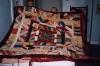
2165 x 2165mm
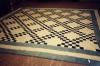
2134 x 2134mm
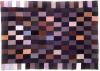
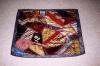
661 a 649mm
1170 x 920mm
1600 x 2100mm