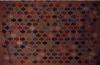
Quilt No.965NGA - National Gallery of Australia
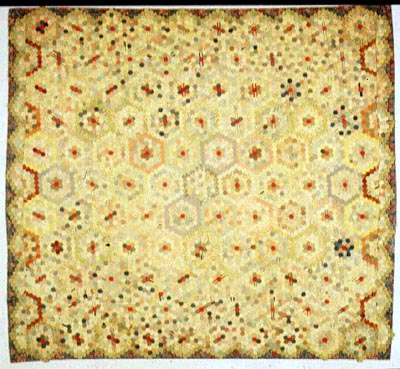
National Gallery of Australia
Owner: 
National Gallery of Australia
Location: 
ACT
Maker
Maker: 
Sophia Wilbow
Made in
AUSTRALIA NSW
Date: 
1881 - 1900
Description: 
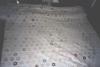
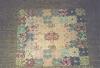
"This quilt follows the traditional hexagon patchwork pieced pattern, which are then joined and sometimes edged with a contrasting border. The edges of the quilt have been turned and then scalloped edges made of identical patches to the main body of the quilt have been attached to the edge. The quilt is fully lined, and the lining is visible front the front face through the gaps between the scalloped edge. The lining is attached to the patchwork with a row of stitches along the edges; there are no stitches in the centre field. The fabrics of the quilt are plain weave cotton in simple...
History: 

The quilt was made by Sophia Mary Wilbow between 1893 and 1896 for her youngest daughter Jane. Jane Wilbow did not marry and upon her death in 1956 the quilt was passed on to a niece, Victoria, who in turn passed it to her daughter Mrs Joyce Hedges, New South Wales. Joyce Hedges donated the quilt to the National Gallery in 1992.

Story: 

"Sophia Mary Wilbow nee Payton (Australia 1829-1924, who was born in Pitt Town near Windsor, made this quilt. Sophia married Thomas Mitchell Wilbow in 1846 and spent most of her life in the Hawkesbury River district where her husband was a farmer and hotelkeeper. She had fourteen children and made a patchwork quilt for each of her seven daughters. This quilt was the last one she made and was given to her youngest daughter Jane. It is believed Sophia worked on the quilt whilst she sat at the side of her dying husband who suffered a long illness prior to his death in 1896." [NGA]

Related Quilts:
Art Gallery of South Australia
Patchwork quilt in the Tumbling Block pattern in light and dark silks in bright colours. On both sides and at the bottom is a wide border in Tumbling Blocks, the pattern vertical at the sides and forming a triangle centre bottom, with an edge on both sides of two black bands with pieced diamonds between. Made for a poster bed. Hand sewn.
1790 x 1750mm
Bev Johnston
Patchwork quilt made from squares and rectangles of pink, blue and white fabric set with a frame of pink and white print around a centre rectangle made of 4 pink triangles. Four corner squares of blue and white stripes, Many squares are pieced from smaller scraps. The Material is a crepe type, possibly used for underwear. Handsewn and machined. Backing is made from cotton scraps, possibly lawn or similar. Padding is flanellete or similar. Edges are bound in a striped material. Quilt shows signs of wear.
620mm x 520mm
Joyce Lannin
A frame quilt with a pattern using hexagons from crepe de chine and silk material. The centre frame consists of a blue rosette of hexagons surrounded by six rosettes or flowers all with black centres. These are surrounded by rows of hexagons and then a row of flowers and then more hexagon borders. The owner refers to the pattern as 'Grandma's Garden'. 2550 x 2550 mm
The Pioneer Women's Hut
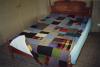
Double sided utility quilt made from machine pieced squares of tailors' samples and men's and boy's suitings. The padding is 5 or 6 layers of pieced used clothing including darned, threadbare socks, part jumpers, blanket pieces etc.
2090 x 1340mm
Robyn Gallaway
Machine made cotton quilt with 100mm cotton squares placed diagonally with peaks running around the edge. The colours are mainly autiumn tones and the patterns include checks, tartans, florals, geometric and plains. Materials were scraps left over from sewing projects such as children's clothes. There is a matching valance.
Annette Gero
This domestic Wagga is two layers of woollen army blankets with the top layer in rectangles joined in rows. The backing is hessian bags that originally contained meat meal.
11650 x 1130mm