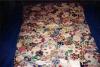
Quilt No.230SM - Stansbury Museum

Owner: 
Stansbury Museum
Location: 
SA
Maker
Maker: 
Hazel Colwell
Made in
AUSTRALIA SA
Date: 
1941 - 1970
Description: 
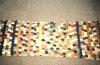
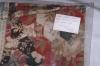
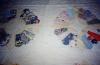
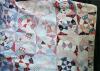
Patchwork quilt constructed of two panels, top and bottom, of squares in coloured fabrics with a single horizontal panel in the middle. Machine stitched. The backing is a black and white striped material similar to mattress ticking.
History: 

Made by Hazel Colwell for the Stansbury Museum when it opened in 1972 in Stansbury (SA). Owned by the Stansbury Museum.

Story: 

"Hazel Colwell (born Bowman) was born at Kadina (SA) on 7 February 1900, and died 25 March 1995. Parents Mary and Alfred Bowman lived on the farm at Weavers until 1922 when the family moved to Adelaide, returning to Stansbury in 1924.
Hazel attended the Stansbury school, the first 3 years she boarded with a family in Stansbury and went home on weekends. The next four years she rode a pushbike the 12 kms every day sometimes scoring a ride home with the Brentwood mail driver. In those days the mail came to Stansbury by steamer and the Brentwood man came across to collect the mail.
Hazel was baptised into the membership of the Stansbury Methodist Church (now Uniting) in 1916 and from then on she became a dedicated member of the church community in all its aspects. She was for over 50 years a member of the teaching staff of the Sunday School, was leader of the young worshippers league for 20 years. Hazel was a very active member of the ladies guild.
On 28 January 1928 she married husband Bruce and in 1930 son Barry was born.
She was involved in many community activities as a very keen member of the Dalrymple Camera Club, won many awards for high quality pictures and gave a great deal of pleasure to many people with her coloured slides. �
She was also an active member of the School Welfare Club. She assisted the V.S.D. (volunteer Services Department) with the war effort contributing her sewing skills, following on to Red Cross activities.
Along with other members Hazel was instrumental in founding the Stansbury Museum and saving the old school house from demolition to retain memories of the past as we see it today.
Hazel was very active in establishing the artifacts displayed, many of them being donated by her including her original camera. She set up the dolls section and old frocks as well����."
[Extract from Hazel Colwell's Obituary]

Related Quilts:
National Trust of Australia (QLD)
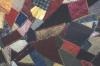
Quilt made of tailors' swatches, machine constructed around a central frame that is mainly mid brown pieces. This is surrounded by rectangles of mainly charcoal greys and the outer border is navy blues. The backing is a heavy cotton with random green and cream and grey stripes.
1651 x 1220mm
Mary Elizabeth (Beth) Burnett
Tumbling Block quilt made from pure silk ribbons, patterned and plain. The quilt edge follows the block shapes. The backing is polished cotton printed with flowers.
2743 x 2439mm
Rozanne Andrew
Patchwork crazy quilt of late 40s and early 50s. Pieces are from curtains, tablecloth,other kitchen type fabrics in cotton, seersucker and linen. Colours are mainly reds, greens, blues, and pastels, in prints and plain. Herringbone stitch is worked around the edge of each patch. No filling. The backing is calico with one edge in a piece of coloured cotton from the front; the calico was a little small for the top.
2020 x 1400mm
West Australian Quilters' Association
The quilt is a repeat block in the Ohio Star pattern in turkey red and cream. Quilted in squares in the cream block and diagonal lines in the star block. The fabric border is disintegrating. The backing is cream calico and the padding is cotton, badly degraded. 1940 x 1760mm.
Margery Smith
Patchwork quilt made from hexagons 63mm across in a variety of cotton prints and plains. The bright coloured patches came from children's clothes and dressmaking scraps. The 'set included a large cot cover, a pillow cover and a circular stool cover. No padding. Backing of unbleached calico. Hand sewn.
2300 x 1840mm
Elsie Roberts
Patchwork quilt has a centre of a square within a square, with rows of scraps added around it. The scraps are mainly cotton shirting fabrics and are cut in different sizes and shapes. The two long sides have a narrow red edging folded from the back. The other two sides have been 'bagged'. Filling is an unusual weave thought to be wool. Backing is a pink, red and beige floral cotton.
2080 x 1650mm