Quilt No.989TL - Thelma Lithgow

Thelma Lithgow
Owner: 
Thelma Lithgow
Location: 
SA
Maker
Maker: 
Margaret Clucas
Made in
SHIPBOARD England
Date: 
1881 - 1900
Description: 
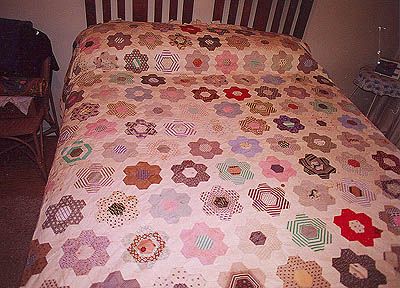
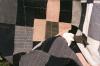
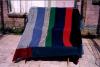
Repeat block quilt top based on hexagons, each 350 mm diameter. Six hexagons and a centre one make a 'flower' and these are set in rows against a plain calico background. Patterned cotton fabrics are used for the hexagons, small prints, fine stripes and tiny flowers. As it is a quilt top only, there is no lining or padding. 2100 x 1800 mm
History: 

The quilt top was made by Margaret Clucas in 1882 on the ship 'Potosi' travelling from the Isle of Man to Australia. It was then owned by her daughter, Mona Harvey (born Clucas) and then her grand-daughter Thelma Muriel Mona Lithgow born 1909.

Story: 

"Margaret Clucas nee Lewin, born Isle of Man 1834, married John Clucas and migrated to Australia via England, travelling on the cargo passenger ship the 'Potosi' 1882. While travelling on the 'Potosi' Margaret made the quilt top but it was never backed. John and Margaret Clucas were both school teachers and were quickly registered in their profession on arrival in St. Australia, Constantly moving around in difficult conditions occupied all their spare time. Hence the quilt was never completed. The hexagon papers were old letters but they have disintegrated over time." [Yvonne Daniel]
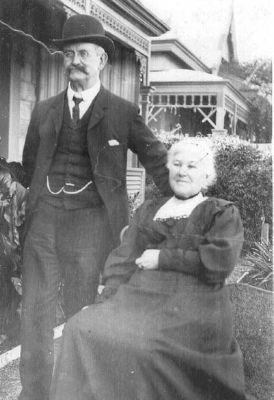
John and Margaret Clucas

Related Quilts:

Helen Sparkman
Hexagon quilt made from dressmaking scraps from one neice. The quilt top only is complete and a few papers are still attached.
2250 x 2000mm
Art Gallery of South Australia
Frame cot quilt in cotton fabrics, the centre square in a paisley print surrounded by two plain borders or frames, then two frames pieced in alternate light and dark triangles, then a frame in a floral print. Outer border is of red fabric, longer at top and bottom to make a rectangle. No quilting. Machine sewn.
1050 x 770mm
National Gallery of Australia
"The quilt consists of 12 blocks of crazy patchwork with an embroidered border. The quilt is made of 167 different fabrics; most of these are silk. These velvets, printed silks and satins are beautifully embroidered with flowers, household items and Kate Greenway images of children at play. Many of the motifs have a strong influence from the Aesthetic Movement. The edge of the quilt carries a border in maroon silk decorated with tendrils and daisies in very fine embroidery.
The patches are joined with hand sewing and embroidery, however the 12 panels are joined with machine stitching (chainstitch machine stitching). The blue silk lining was hand sewn into position with silk thread." [NGA]
"The quilt does consist of three layers but the central layer is not padding. The crazy patch pieces were sewn together and this was lined with white cotton fabric prior to the embroidery at the edges of the 12 panels being placed. This in turn was lined with a fine blue silk." [NGA] 1810 x 1460 mm
Glenda Wilkinson
The quilt consists of 2 layers of random pieces of woollen coating and suiting materials machined together, very dark colours on one side and a mixture of dark and lighter on the other. The 2 layers are quilted together with a row of machining and has a folded and machine stitched edge. There is no padding.
1270 x 950mm
Annette Gero
Hand pieced hexagon quilt or table cover with centre motif of hexagons within hexagons. The remainder of the quilt is mainly hexagon rosettes. The materials are silks and brocades and it is pieced over papers in the English tradition.
1710 x 1600mm
National Gallery of Australia
" Reversible patchwork quilt of woollen suiting/upholstery fabrics in khaki, greys, blues and browns. Both sides have different designs. The front of the quilt has 13 rows of 12 vertical rectangles flanked on either side by a column of 22 horizontal rectangles. The reverse has a more interesting and complex design of small and very large rectangles, squares and triangles; with khaki contrasting with the duller greys and blues. The patchwork layers are joined at the edges with machine stitching and the quilt is machine quilted along 3 horizontal lines following joins in the patchwork; therefore not being totally straight. These lines are more noticeable on the reverse. The reverse face has been on display at the NGA." [NGA] There is a cotton blanket used as padding. 2054 x 1451mm