
Quilt No.536KBS - Kay Bruce-Smith
1160 x 1100mm
The quilt top is one of two believed to have belonged to Margaret Dickson in Donegal Northern Ireland and to have been made by her before 1900. They came to Australia as part of her chattels about 1910. In 1977 a descendant died and the quilt tops were found in the trunks in which they came out from Ireland. They came into the possession of the present owner's mother and father- in- law and then to Kay Bruce-Smith who owns them now.
"These quilt tops came to Australia in approximately 1910 as part of the chattels of one, Margaret Dickson (nee McLean). Margaret's father had gone to Northern Ireland from Garamore in Scotland. Garamore is south of Glasgow. Her father was an Orangeman and so too was her husband. Margaret and her husband lived in a little thatched cottage on their farm with their two children Annie Kyle and David Charles Dickson. Margaret was widowed after her husband answered a knock at the door. He was cruelly murdered in front of his wife and children, when an ignited stick of gelignite was dropped down his shirt front. Her husband's father had left a will that disinherited Margaret should she remarry. However, Margaret did not receive any inheritance even though she did not remarry. She and the children were left destitute upon the death of her husband.
Margaret's elder brother, John Robert McLean, immigrated to Australia sailing before the mast. He was only 12 years old. He made a life for himself in Australia. He rose from nothing to become a very wealthy businessman. He was involved in with McKay Massey Harrison the farm machinery manufacturers. J.R.McLean brought the destitute Margaret and her children to Australia from Ireland. On their arrival he purchased a house for them at 25 Arlington Street, Fivedock.
Annie did not marry. She lived the rest of her life with her mother and David at the above address. She and her mother were born needlewomen, probably out of necessity, and made all their clothing. They did not enjoy their life in Australia and forever held the desire to return to Ireland.
When David was old enough to work, his uncle arranged for employment in the company business. David grew to be a very handsome young man. However, his uncle forbade him to marry as it would impair his ability to care for his mother and sister. He also had to repay his uncle for the purchase of the family's home.
When David was admitted to a nursing home in 1977, the two quilt tops were discovered in the trunks in which they had travelled from Ireland, all those years before. They then came into the possession of my mother and father-in-law. My father in law is is John Wilson McLean, who is David Dickson's first cousin once removed. My mother in law knew of my interest in patchwork and quilting. Earlier this year she asked if I would be interested in two scrap quilt tops. She felt they were in poor condition and considered discarding them
I accepted the two quilt tops with delight and felt honoured to be entrusted with this small piece of history."
[Extract from family history. Kay Bruce-Smith 27.8.98]
Related Quilts:
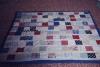
1626 x 1601mm
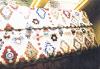
3048 x 2210mm
2415 x 2110mm
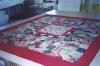
2330 x 2030mm
1740 x 1210mm.
1645 x 1060mm