Quilt No.508JR - Name withheld

Name withheld
Owner: 
Name withheld
Location: 
Tasmania
Made in
Unknown
Date: 
1851 - 1880
Description: 
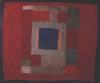
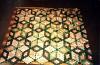
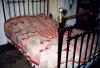
Quilt top in postage stamp pattern typical of military quilts. 5 x 5 blocks each 280 x 280mm. Colours are predominantly red, black and cream. Thought to have been made using uniform material from the Crimean war
1350 x 1350mm
History: 

The quilt was left to the present owner by Miss Willis, a friend. A note was pinned to it "This rug was made by wounded soldiers from the Crimean war who, being destitute, cut up their uniforms and made them into rugs which were sold to benefit the men." Miss Willis died in 1977 in Burnie Tasmania.

Story: 

The present owner's family lived close to Miss Willis for many years. She had only one brother who died long before her and no children. The owner writes: "She was a very clever woman with a huge variety of craft-work. I was an only child and when I was a little girl she made me the most beautiful doll's clothes and blankets and sheets for my doll's cradle, frilled pillowslips with lemon bows and later she made me a huge wardrobe of clothes for my teenage doll collection. They are so beautiful and detailed. She was a very clever needle-worker. She was also a keen gardener with a great knowledge of plants. She was also a very talented painter. We have 5 of her paintings framed now. They were painted in the 1920s. When I was little Miss Willis wrote me several short stories and illustrated them and made them into books for me. They featured my pet cat and her pet cat.
Miss Willis' great, great grandfather settled in Van Diemans Land in the 1820s with his family and built a fine Georgian home near Campbelltown. I have absolutely no idea from which side of her family the quilt came from, but recently I read in a Tasmanian history book that when called upon to help financially after the Crimean war, Tasmanians responded very well - so maybe it was then that the quilt arrived in the family - however if this is the case it doesn't answer why it has never been lined and padded. (It is the top only.)." [Quilt owner 4.3.1997]

Related Quilts:
Kapunda Historical Society
Patchwork quilt made from cotton fabrics in stripes, small prints, and plains. Centre block is pieced red and white triangles within a blue and white striped frame, with a row above and below of triangles in a flying geese pattern. Two rows of triangles in the flying geese pattern are on either side the full length of the quilt. Quilt is bordered with red cotton. Colours are red, white, pink, blue and yellow. Padding is probably a woollen blanket, the backing is linen. Closely quilted all over.
2180 x 1930mm
Annette Gero
Quilt made from furnishing materials some with mettalic flecks. It is machine sewn.
160 x 135mm
Red Cliffs Historical Society
Quilt with hexagons forming lozenge or honeycomb pattern. Predominantly greens and pinks in brocatelle (rayon brocade). All hand stitched. The backing is lime green rayon. The padding is probably dacron.
1800 x 1630mm
Doreen Carter
The quilt is called 'Loved'. The pattern is log cabin and it is made from dress materials and pyjama flannelette. The original filling was a heavy woollen blanket (now flannelette) and the backing is green headcloth - all government issue. With its restoration, the backing was supplemented with a green floral, and the quilt is now tied. The quilt is machine pieced, some restoration work is done by hand.
2260 x 1920mm
Mr. K.Green
Crazy patchwork quilt made from silk, cotton and velvet in pastels and rich dark colours with a wide border of dark burgundy silk velvet. Decorative embroidery stitches including straight, herringbone and feather edge each piece. Most pieces have embroidered motifs including crown, flowers, horseshoe and Australian motifs of wattle and emu. Date '1891' worked in cross stitch on one piece. The padding is wool and the backing dark red satin and these are joined by diagonal machine stitching in yellow thread.
1750 x 1100mm
National Trust of Australia (NSW)
Pieced patchwork quilt of hexagons in cottons, chintzes and linen. The centre is pieced in 6 point hexagon stars, then radiating out are large hexagons alternating with tumbling blocks, then 6 piece hexagon stars and 4 piece hexagon diamonds. Some pieces have Egyptian patterns dating from 1800 - 1805. The backing is cream linen.
2450 x 2200mm