
Quilt No.882NTNW - National Trust of Australia (NSW)
Description:
Unfinished patchwork quilt in the pattern known as 'Grandmother's Flower Garden'. Hexagons are pieced over papers in the English tradition and most papes are intact some with pencilled numbers. 6 hexagons and one in the centre form the 'flowers'. There are 49 fabric samples of varying prints and sizes.
History:
This unfinished quilt top was made by Lady Mary Fitzroy in Sydney in the 1840s. It was a gift to the National Trust (NSW) by Mrs.Yvonne Perceval in 1998 and is now part of the National Trust (NSW) quilt collection. Also gifted at the same time was Lady Fitzroy's jewellery box. Her work bag came from the same donor at an earlier date.
Story:
Lady Fitzroy was the wife of Sir Charles Fitzroy , the Governor appointed to the colony between 1845 and 1855. She was killed in a carriage accident at old Government House Parramatta in 1847.
Related Quilts:
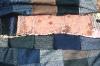
Double sided utility quilt made from machine pieced squares of tailors' samples and men's and boy's suitings. The padding is 5 or 6 layers of pieced used clothing including darned, threadbare socks, part jumpers, blanket pieces etc.
2090 x 1340mm
2090 x 1340mm
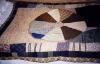
The top has a segmented circle in the centre surrounded by a border of small rectangles. The circle is featherstitched on to the background. Materials are wools and cottons and it is hand pieced. The other side appears to have been originally men's suiting materials strip pieced. It is now covered with a children's print in light cotton joined in long rectangles. The padding is coarse heavyweight cotton.
1410 x 1080mm
1410 x 1080mm
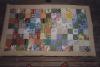
Machine sewn quilt made from 125mm squares of scraps left over from dressmaking joined in strips and then the strips joined. There is a border of fawn cotton and the backing is the same material. The padding is an old blanket and the border is padded with sheep's wool.
1400 x 925mm
1400 x 925mm
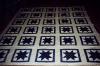
Cotton quilt made in the USA. Pattern is the 'Evening Star' and each star has a frame. It is hand pieced and hand quilted and uses shirting material. It has been modified along two sides where the block extension is visible, having been turned to make a hem. The backing is calico and the padding is cotton.
1829 x 1575mm
1829 x 1575mm
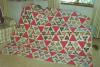
Quilt in traditional design called 'Seven Sisters'. Seven stars, each of six diamonds are set against a cream background, surrounded by bright pink triangles. Hand pieced and hand quilted. Padding is cotton, and backing is cream calico. 2100 x 1850 mm.
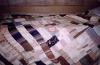
Crazy patchwork on to foundation material with the edges of the pieces turned under and machined. It is not quilted. A 25mm red binding has been machined on. There is no padding. The backing is red wholecloth cotton.
1940 x 1540mm
1940 x 1540mm