
Quilt No.595PWH - The Pioneer Women's Hut
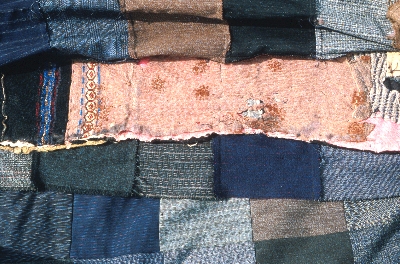
Owner:
The Pioneer Women's Hut
Location:
NSW Riverina
Maker
Maker:
Neta le Cerf
Made in
AUSTRALIA NSW
Patterms
Date:
1921 - 1940
Description:
Double sided utility quilt made from machine pieced squares of tailors' samples and men's and boy's suitings. The padding is 5 or 6 layers of pieced used clothing including darned, threadbare socks, part jumpers, blanket pieces etc.
2090 x 1340mm
2090 x 1340mm
History:
The quilt was made by Neta le Cerf (born Cayirylys) c.1940 in Tumbarumba NSW. The quilt was made for use on beds in the house and on the verandah. It was stored in the linen press of Norm and Ellen Bradley's home at Rosewood and always valued. Norm Bradley donated it to the Pioneer Women's Hut. It is occasionally displayed at the Museum.
Story:
It is thought the tailors' sample books came from the family store of 'Le Cerf and Blencowe' in the Parade, Tumbarumba. As well as general groceries and farm merchandise men could order their suits through the store.
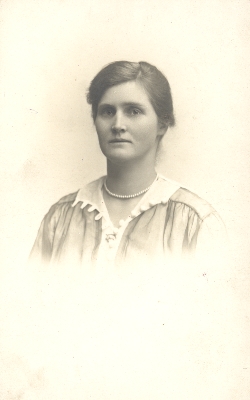
Neta le Cerf c.1930
Related Quilts:
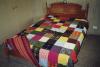
Patchwork quilt made from squares of woollen fabric scraps from dressmaking. Squares are stitched together in no particular order. Colours are bright, with pink, yellow, green, brown and light blue predominating. Fabric is plain, checks and stripes. No padding or quilting. Backing is a cotton bedspread, striped in pinks and magenta.
2530 x 1640mm
2530 x 1640mm
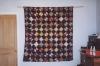
Hand pieced log cabin quilt in silks, satins and velvets. There is a silk backing machined on, possiby a later addition. The quilt has over 5000 pieced.
1820 x 1680mm
1820 x 1680mm
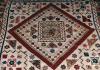
Unlined quilt. Central square of floral chintz with rectangular and chevron border making a larger frame that is set within another square-on-point frame edged with 2 toned red leaf pattererned chintz. This quilt is mainly pieced (squares, triangles, lozenges) but the hexagon rosettes are appliqued. Dress and furnishing cottons dating from the early 1800s. Raw edged, unfinished. All hand stitched.
2400 x 2400mm
2400 x 2400mm
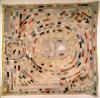
"The coverlet is of cream cheesecloth, highly decorated with applied figures and pieced fabric bands. The appliqué bands follow the edge of the coverlet for some time and then become circles radiating from the centre. The bands form two framed circular areas that carry appliquéd images. A smaller area lower centre of the cloth depicts birds and insects. In the centre of the work is a bordered oval with two aboriginal figures, an angel, kangaroo, emu and kookaburra, with the words 'Advance Australia Fair' embroidered in black thread. The stitching and construction of the coverlet is quite crude." [NGA] The quilt is not padded or lined. 1640 x 1550mm
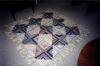
Log cabin quilt consisting of 36 blocks each 200mm square. Light and dark arrangement with a variety of small patterned cotton materials (floral, spotted, striped) and plains. The blocks are hand stitched on to fine cotton and then joined by machine. There is a 120mm double gathered frill of floral cotton with a beige background. The backing is 2 pieces of cream cotton with repeat floral and musical motifs interspersed with forget me nots.
1500 x 1500mm
1500 x 1500mm
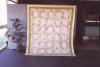
Pieced repeat block, in what the owner calls 'Our Village Green' pattern. Wide variety of patterned and plain materials. Finely quilted. Padding is cotton and the backing is white calico. 2180 x 1890 mm.