
Quilt No.377MR - Mary and Max Robertson
Owner:
Mary and Max Robertson
Location:
NSW Riverina
Maker
Maker:
Max Robertson
Made in
AUSTRALIA NSW
Date:
1941 - 1970
Description:
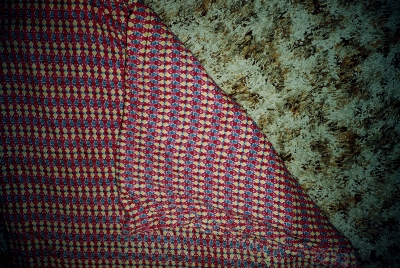
Traditional Wagga rug made from 3 wheat bags joined along the long side by sewing with bag needle and twine. Machined twill cover was put on later in the 1960s. Originally no padding but now the bags are the padding. One of a pair(identical).
1790 x 1160mm
1790 x 1160mm
History:
The original traditional Wagga rug was made by Max Robertson. Later it was covered with the patterned twill material by Mary Robertson. It is not used now but remains in the family, is valued and is stored in Coolamon.
Story:
Max and Mary liked camping with their 3 children and used the Wagga rugs on the camp stretchers in the tent.
Related Quilts:
Wholecloth pram quilt with a top of pink cotton sateen, and the reverse is a more finely woven, ivory, fabric. All over quilting design as main feature, with stylised hearts, leaves and cross hatching. The padding is cotton batting. 870 x 660 mm.
Hand stitched, cotton, appliquéd, quilt in a flower pattern on a plain background. Colours are shades of green, apricot and browns. This quilt was known as a 'Bride's Quilt'. Padding is thought to be layers of white fabric raised almost like a wadding. The backing is cotton material. 2470 x 2020 mm.
It is a plain white linen double-bed sheet or bed-cover on which have been embroidered (over autographed signatures) the names of members of various associations and clubs, local MPs, visiting dignitaries etc associated with the Berry Agricultural Show of 1906. There are badges and emblems also embroidered in red or pale gold thread including the central Berry Agricultural Society Association motif surrounded by a wreath of lillipilly leaves and berries, a rebus on the name 'Berry'.
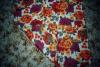
Domestic Wagga made from 3 bags joined (the bags feel lighter than the jute wheat or flour bags) and covered back and front with floral cotton featuring large roses in red and oranges. The cover is machined.
1750 x 840mm
1750 x 840mm
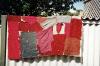
Quilt, single bed size, made from reused clothing roughly handstitched on to a backing of a wool/linen blanket type fabric in green, cream and brown stripes. Clothing is fronts and backs of old jumpers, vests etc as well as opened out sleeves in red, brown and grey. They are stitched together in several layers with long stitches. Another top may have been intended to cover the stitched down layers of clothing.
1500 x 1040mm
1500 x 1040mm
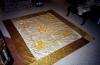
Hand worked wholecloth Chinese quilt. Background is cream with a central motif of a dragon embroidered in various shades of orange. The border has floral and leaf decoration at each corner joined by a stem interspersed with leaves, berries and butterflies. The border is dull gold satin finished cotton with a fine gold braid machined on. The backing is fine brown cotton.
1730 x 1700mm
1730 x 1700mm