Quilt No.160WHS - Williamstown Historical Society

Owner: 
Williamstown Historical Society
Location: 
VIC Melbourne
Maker
Maker: 
Mrs Hansen
Made in
AUSTRALIA VIC
Date: 
1901 - 1920
Description: 
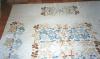
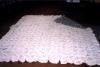
Quilt made of squares of calico joined together. These have embroidered signatures of army personnel and names of battles zones, from World War I. It is lined with muslin.
2000 x 1500mm
History: 

The quilt was put together by Mrs Hansen during World War I. It was given to the Williamstown Historical Society (Vic) by Mrs Hansen in memory of her son Captain Hansen, a soldier who was killed in World War I.

Story: 

"Mrs Hansen and other mothers sent food parcels to their soldier relatives serving overseas during World War I. The tins containing the food were wrapped in calico. Mrs Hansen asked her son to get his men to sign the pieces of calico and send them back home. She then got her friends to embroider over the signatures. The squares of calico were then joined together to form a quilt. The names of the various battle zones were also embroidered on the quilt. The qult is lined in muslin. It has never been used as a bed quilt, but hangs in our Museum. �"
[Lois Swaby Sec. Williamstown Historical Society]

Related Quilts:
Yvonne Hamdorf
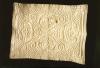
Wholecloth pram quilt with a top of pink cotton sateen, and the reverse is a more finely woven, ivory, fabric. All over quilting design as main feature, with stylised hearts, leaves and cross hatching. The padding is cotton batting. 870 x 660 mm.
John Tomkin
Hand stitched, cotton, appliquéd, quilt in a flower pattern on a plain background. Colours are shades of green, apricot and browns. This quilt was known as a 'Bride's Quilt'. Padding is thought to be layers of white fabric raised almost like a wadding. The backing is cotton material. 2470 x 2020 mm.
National Gallery of Australia
" Reversible patchwork quilt of woollen suiting/upholstery fabrics in khaki, greys, blues and browns. Both sides have different designs. The front of the quilt has 13 rows of 12 vertical rectangles flanked on either side by a column of 22 horizontal rectangles. The reverse has a more interesting and complex design of small and very large rectangles, squares and triangles; with khaki contrasting with the duller greys and blues. The patchwork layers are joined at the edges with machine stitching and the quilt is machine quilted along 3 horizontal lines following joins in the patchwork; therefore not being totally straight. These lines are more noticeable on the reverse. The reverse face has been on display at the NGA." [NGA] There is a cotton blanket used as padding. 2054 x 1451mm
Dorothy Stevens
Utilitarian quilt. Padding consists of recycled hand knitted jumper pieces (mainly 3 ply crepe and 8 ply) tacked to a layer of cotton material with strong buttonhole twist thread. The top is a piece of cotton fabric. Machine quilted in rows approximately 70mm apart.
1827 x 1423mm
Mr. K.Green
Crazy patchwork quilt made from silk, cotton and velvet in pastels and rich dark colours with a wide border of dark burgundy silk velvet. Decorative embroidery stitches including straight, herringbone and feather edge each piece. Most pieces have embroidered motifs including crown, flowers, horseshoe and Australian motifs of wattle and emu. Date '1891' worked in cross stitch on one piece. The padding is wool and the backing dark red satin and these are joined by diagonal machine stitching in yellow thread.
1750 x 1100mm
With held as requested
Wholecloth quilt with top and backing made from coarsley woven linen. The edges are bound with paisley printed material. The quilting pattern consists of a series of whorls in different sizes. The padding is fleece wool.
1920 x 1756mm