
Quilt No.378MR - Mary and Max Robertson
Owner:
Mary and Max Robertson
Location:
NSW Riverina
Maker
Maker:
Max Robertson
Made in
AUSTRALIA NSW
Date:
1941 - 1970
Description:
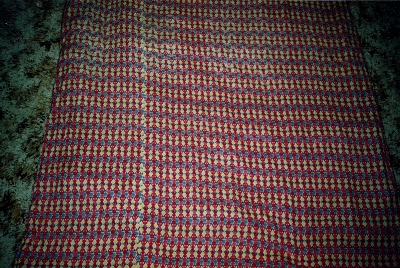
Traditional Wagga rug made from 3 wheat bags joined along the long side by sewing with bag needle and twine. Machined twill cover was put on later in the 1960s. Originally no padding but now the bags are the padding. One of a pair(identical).
1790 x 1160mm
1790 x 1160mm
History:
The original traditional Wagga rug was made by Max Robertson. Later it was covered with the patterned twill material by Mary Robertson. It is not used now but remains in the family, is valued and is stored in Coolamon NSW.
Story:
Max and Mary liked camping with their 3 children and used the Wagga rugs on the camp stretchers in the tent.
Related Quilts:
Wholecloth pram quilt with a top of pink cotton sateen, and the reverse is a more finely woven, ivory, fabric. All over quilting design as main feature, with stylised hearts, leaves and cross hatching. The padding is cotton batting. 870 x 660 mm.
Hand stitched, cotton, appliquéd, quilt in a flower pattern on a plain background. Colours are shades of green, apricot and browns. This quilt was known as a 'Bride's Quilt'. Padding is thought to be layers of white fabric raised almost like a wadding. The backing is cotton material. 2470 x 2020 mm.
Crazy patchwork quilt made from silk, cotton and velvet in pastels and rich dark colours with a wide border of dark burgundy silk velvet. Decorative embroidery stitches including straight, herringbone and feather edge each piece. Most pieces have embroidered motifs including crown, flowers, horseshoe and Australian motifs of wattle and emu. Date '1891' worked in cross stitch on one piece. The padding is wool and the backing dark red satin and these are joined by diagonal machine stitching in yellow thread.
1750 x 1100mm
1750 x 1100mm
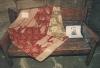
Double sided cretonne quilt, red floral one side, green floral the other. The padding is layers of blanket pieces and pieces of woollen clothes tacked flat. It is machine quilted in squares from the centre outwards.
1270 x 1060mm
1270 x 1060mm
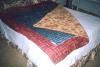
Wholecloth quilt with one side blue satin with a red satin border and the reverse side wholecloth floral cotton. The quilting is parallel lines and squares. It is all hand stitched. The padding is raw cotton.
1740 x 1240mm
1740 x 1240mm
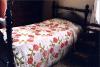
Cotton applique quilt in 'Kentucky Rose' wreath pattern. Cream background with applique flowers in deep pink with green stems and leaves. The wreaths, each with 4 flowers, are repeated across the quilt. It is extensively hand quilted. The backing is cream finished cotton and the padding is cotton.
2300 x 2250
2300 x 2250