
Quilt No.910CD - Celia Dolley
Owner:
Celia Dolley
Location:
QLD South West
Maker
Maker:
Kate Cameron
Made in
AUSTRALIA Qld
Patterms
Date:
1941 - 1970
Description:
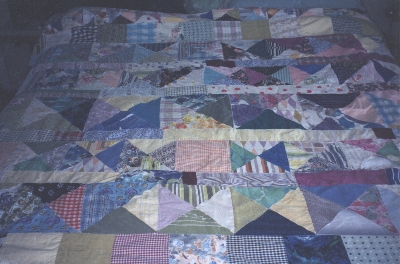
Cotton scrap quilt with shapes of diamonds, strip and squares. The quilt has been repaired using machine zig zag in white cotton. There is no padding and the backing is calico.
2175 x 1625mm
2175 x 1625mm
History:
The quilt was made in the 1960s in Bundaberg Queensland by Kate Cameron (born Kelly). It was then owned by Beth Cameron her daughter-in-law (born Sharp) and now belongs to Celia Dooley (born Cameron.) It is not used now.
Story:
Kate Cameron (1889 - 1975) was a qualified seamstress, trained at the convent in Gladstone. She went out to people's houses and sewed for 2/6 a day. She made trousers for her 3 boys until they were teenagers. Kate was also a tailoress and was skilled at embroidery and crochet. She made her own wedding dress.
The scraps used for the quilt came from Mrs. Byers a dressmaker in Bundaberg Queensland.
Related Quilts:
Quilt in a wide variety of patterned and plain hexagons in cotton with a wide green border. There is no padding and the backing is cotton.
2500 x 2200mm
2500 x 2200mm
Crazy patchwork on to foundation material with the edges of the pieces turned under and machined. It is not quilted. A 25mm red binding has been machined on. There is no padding. The backing is red wholecloth cotton.
1940 x 1540mm
1940 x 1540mm
Child's Patchwork quilt of pieced repeat blocks in red print and white cotton, in 'Bow Tie' pattern. Qult has cotton backing, and wool filling. Some patches are fraying. The quilt has 'Mary Lactitia Thompson' embroidered on it.
1905 x 1296mm
1905 x 1296mm
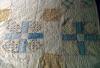
Patchwork quilt, all cotton including cotton padding. Pattern is based on squares and a cross. Variety of fabrics, plain and patterned. Hand stitched and quilted.
2083 x 1626mm
2083 x 1626mm
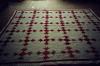
Cotton quilt made in the USA. The pattern is 'Turkey Tracks'. It is machine pieced and very finely hand quilted. The backing is calico and the padding is cotton.
1880 x 1753mm
1880 x 1753mm
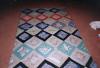
Quilt made from dressmaking materials in a design probably made up by the maker but resembling 'Courthouse Steps'. The outer border of each block is mitred. Originally it was reversible but during restoration the back was brought to the front, doubling the size of the quilt. The padding is old woollen materials. The backing is a new piece of floral material. It is now machine quilted.
1830 x 1220mm
1830 x 1220mm