
Quilt No.421JB - Joan Bradford
Owner:
Joan Bradford
Location:
QLD South Coast
Maker
Maker:
Hazel Eastwell
Made in
AUSTRALAIA QLD
Date:
1941 - 1970
Description:
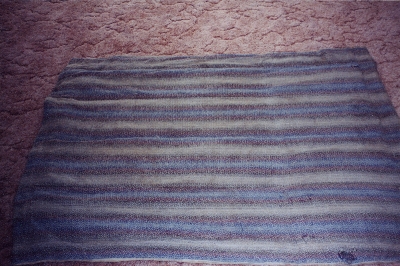
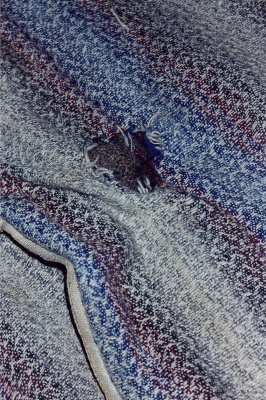
Utility quilt with wholecloth top and backing of twill upholstery material. Machine construction. Padding is 2 layers of wool blanket. Stitched through all 4 layers.
1474 x 1093mm
1474 x 1093mm
History:
This utility quilt was made in the 1940s by Hazel Eastwell (born Gallagher in 1914). It was given to the present owner when they first bought their farm and were camping in a shed. It is not used now.
Story:
Hazel Eastwell made this quilt on a treadle Singer sewing machine. Joan Bradford commented that Hazel sewed because she had to. She made clothes for the children and quilts, did mending and patching and helped run a dairy.
Related Quilts:
Wholecloth pram quilt with a top of pink cotton sateen, and the reverse is a more finely woven, ivory, fabric. All over quilting design as main feature, with stylised hearts, leaves and cross hatching. The padding is cotton batting. 870 x 660 mm.
Hand stitched, cotton, appliquéd, quilt in a flower pattern on a plain background. Colours are shades of green, apricot and browns. This quilt was known as a 'Bride's Quilt'. Padding is thought to be layers of white fabric raised almost like a wadding. The backing is cotton material. 2470 x 2020 mm.
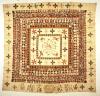
"The Rajah "quilt" is a patchwork and appliquéd bed cover or coverlet. It is in pieced medallion or framed style: a popular design style for quilts in the British Isles in the mid 1800's. There is a central field of white cotton decorated with appliquéd (in broderie perse) chintz birds and floral motifs. This central field is framed by 12 bands or strips of patchwork printed cotton. The quilt is finished at the outer edge by white cotton decorated with appliquéd daisies on three sides and inscription in cross stitch surrounded by floral chintz attached with broderie perse on the fourth side. All fabrics used in the Rajah quilt are cotton with the exception of small amounts of linen and silk threads. The quilt shows evidence of being produced by many hands." [NGA] The quilt is not padded or lined. 3372 x 3250mm
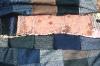
Double sided utility quilt made from machine pieced squares of tailors' samples and men's and boy's suitings. The padding is 5 or 6 layers of pieced used clothing including darned, threadbare socks, part jumpers, blanket pieces etc.
2090 x 1340mm
2090 x 1340mm
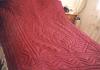
Wholecloth quilt. Quilting pattern is a large 'feathered thistle' with thick stem, as the main design feature. The border is a combination of straight and curved parallel lines. Burgundy sateen with damask weave. All quilting is handstitched. Padding is cotton wadding and backing is tomato red cotton. 2150 x 1820 mm.
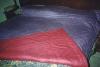
Wholecloth quilt with one side of mauve coloured cotton sateen and the reverse side of cherry coloured cotton. The hand quilting pattern is a diamond shape in the centre of a large floral motif. Around the edge is a large curvilinear pattern. The padding is raw cotton.
2000 x 1810mm
2000 x 1810mm