
Typically Australian Quilts
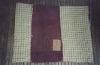
Utilitarian quilt made from large pieces of wool, flannel and cotton. Machine construction and the padding is wool.
1570 x 152Omm
1570 x 152Omm
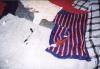
Thick padding for a wholecloth quilt constructed from pieces of old woollen clothing. The backing is a calico sheet. Originally had a cretonne cover.
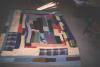
Double sided machine sewn patchwork quilt made from clothing scraps, wool blends, corduroy, velvets. Patterns include checks and tartans and there are many plain colours. Shapes are mainly rectangles and squares.
1524 x 1372mm
1524 x 1372mm
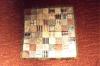
Small patchwork piece possibly made from salesman's samples. There is no opening in the back so it is not a cushion cover. There is no padding. The backing is green polished cotton. There is a 40mm fringe around the edge.
520 x 520mm
520 x 520mm
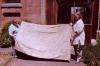
Wholecloth quilt with both sides of floral cotton. The padding is thought to be hessian bags.
2060 x 1300mm
2060 x 1300mm
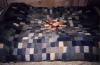
Large double sided quilt of rectangles and squares of men's suitings, patterned and plain on both sides. The top has a central motif of a circle of three segmented rings radiating from a single hexagon. The outer ring is all tailors' samples and the inner rings are a variety of materials. There is some featherstitching in red. The quilt is sparsley machine quilted.
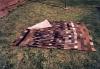
Patchwork quilt of rectangular wool and cotton tailors' samples, in browns, greys, navy, black and beige, in plains and patterned weaves. Padding is a woollen blanket, and the backing is a patterned cotton.
1956 x 1702mm
1956 x 1702mm
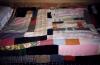
Double sided quilt. One side is different shapes including rectangles in various sizes in wools and men's suiting material. It is hand pieced. The pther side is mainly cottons in florals of different patterns joined in strips of varying width and machine and hand pieced. There is a 25mm binding. The padding is an old blanket.
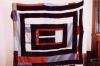
Double sided quilt. One side is frame with borders of wool rectangles mainly offcuts of men's suiting from tailors' shops. The other side is mainly flannelette in stripes and patterns similar to pyjama material. The padding is pieced patches of worn jumpers that were too matted to be unpicked. Machine construction.
1700 x 1490mm
1700 x 1490mm
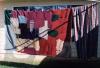
Wholecloth quilt made from turquoise and red plaid brushed cotton, with a filling of a marcella bedspread with cut up pieces of knitted and crocheted garments stitched on top by hand and machine. Garment pieces are pink, red, yellow, black and pastels. Sleeves, collar and pockets can be clearly seen. Backing is an old blanket.
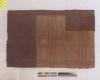
This domestic Wagga is two layers of woollen army blankets with the top layer in rectangles joined in rows. The backing is hessian bags that originally contained meat meal.
11650 x 1130mm
11650 x 1130mm
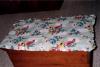
Rectangular cot quilt of green floral cretonne with pleated frill. Machine made. The backing is the same material. It is tied not quilted. The padding is old woollen jumpers.
1050 x 610mm
1050 x 610mm
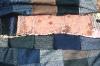
Double sided utility quilt made from machine pieced squares of tailors' samples and men's and boy's suitings. The padding is 5 or 6 layers of pieced used clothing including darned, threadbare socks, part jumpers, blanket pieces etc.
2090 x 1340mm
2090 x 1340mm
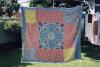
One side of this quilt is large pieces of check and striped material surrounding a small patterned supper cloth with a border of scrap pieces. The other side is small, floral, check, spotted, striped and plain cotton pieces surrounding a tablecloth. It is machine sewn and is not quilted. The padding is an old woollen blanket.
1825 x 1625mm
1825 x 1625mm
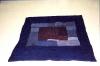
Quilt made of tailors' swatches, machine constructed around a central frame that is mainly mid brown pieces. This is surrounded by rectangles of mainly charcoal greys and the outer border is navy blues. The backing is a heavy cotton with random green and cream and grey stripes.
1651 x 1220mm
1651 x 1220mm
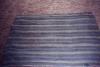
Utility quilt with wholecloth top and backing of twill upholstery material. Machine construction. Padding is 2 layers of wool blanket. Stitched through all 4 layers.
1474 x 1093mm
1474 x 1093mm
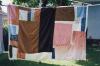
Large and small pieces, mainly rectangles and mainly cottons, machine sewn. One side has replacement materials in red check, brown, tan, blue and pink materials. The padding is an old woollen blanket.
1950 x 1327mm
1950 x 1327mm
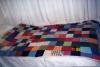
Patchwork quilt made from squares of wool, cotton, tweed, corduroy, tartan and stretch knit fabrics. Colours are mainly reds, greens, blues, pink and orange, mostly solid colours with some checks, stripes and florals. Padding is an open weave hessian material. Backing is a loosely woven cotton, pieced, buff coloured with a woven red and orange thread. Machine pieced, machine quilted in a large rectangle.
1601 x 915mm
1601 x 915mm
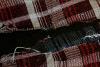
Wholecloth utilitarian quilt with velour type material top and cottage weave curtain material on the back. The padding is a 'bush blanket'. Machine sewn and quilted.
1677 x 1144mm
1677 x 1144mm
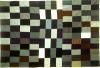
" Reversible patchwork quilt of woollen suiting in grey, blue, navy, maroon and brown. The fabrics appear to be new tailor's sample pieces (the sizing is still present on the fabric, signifying it has never been washed). The patches are rectangular and vary in size. Both sides have different designs. The front of the quilt has 4 rows of 12 vertical rectangles then below this are 4 rows of 7 horizontal rectangles followed below by 4 rows of 11 vertical rectangles. The reverse of the quilt has a section at the top and bottom composed of 5 rows of 9 horizontal rectangles. The central area is made up of a centre section of 6 rows of 5 vertical rectangles; flanked on either side by a column of 10 horizontal rectangles and two columns of 8 smaller vertical rectangles.
The patchwork layers are joined at the edges with machine stitching. The patchwork layers and padding are machine quilted on the front down 2 vertical lines following joins in the patchwork; therefore not being totally straight. The lines are more noticeable on the reverse as the 2 sides do not match. The front face is displayed at the NGA.
Between the patchwork layers is a striped cotton blanket in black, sky blue, white and cream." [NGA]
2082 x 1386mm
The patchwork layers are joined at the edges with machine stitching. The patchwork layers and padding are machine quilted on the front down 2 vertical lines following joins in the patchwork; therefore not being totally straight. The lines are more noticeable on the reverse as the 2 sides do not match. The front face is displayed at the NGA.
Between the patchwork layers is a striped cotton blanket in black, sky blue, white and cream." [NGA]
2082 x 1386mm